Large Language Models (LLMs): Deep learning neural networks built to understand and generate text
Trained on vast amounts of text from diverse sources (Internet, Wikipedia, social media, books, podcasts, etc.)
Convert text data into statistical patterns to predict words and sentences
It’s all in the name: GPT
Generative Pre-trained Transformer:
Generative: Can generate text
Pre-trained: Learned patterns from a lot of text found online
Autoregressive: Predicts the next word from previous ones
Learned from raw text, no human labels needed
Transformer: Efficient model architecture for sequential data
Next word prediction
Question for you:
What does this mean, when the model writes citations and references?
How does the model represent text?
Words
Even though the sound of it is something quite atrocious, if you say it loud enough, you’ll always sound precocious, Supercalifragilisticexpialidocious!
Marry Poppins
→
Tokens = “Subwords”
Steps for training frontier LLMs
Pre-train on most of the available data from the internet via next-word prediction.
Fine-tune model to the chat setting.
Refine with human feedback, e.g. via reinforcement learning.
Refining with human feedback
RLHF: Reinforcement learning from human feedback
Human preference data is used for creating a reward model, which is then used to train the LLM via reinforcement learning.
Which models for what?
Current top models
Gemini 2.5 Pro (Google)
ChatGPT-4o, GPT-4.5 and o3 (OpenAI)
Grok-3 (xAI)
Claude 3.7 Sonnet (Anthropic)
Best non-proprietary:
DeepSeek-V3 (DeepSeek)
Types of models
General or efficient: default, fast, everyday tasks
Important: This is already included as a general capability of models.
Automated extended reasoning
No need for explicit chain-of-thought prompting
Models trained to use “scratch pads” in background
Hidden (e.g. GPT 4.x) or partially visible (e.g. o3)
Test different models
Simple math example:
9.11 or 9.9, which is bigger?
Compare different models. E.g. Gemini Flash 2.0 versus 2.5
options: - try adding “short answer” to provoke wrong output
if the model gives wrong answer:
ask it to explain it
ask to check with code
Example output
Models learn by examples
Do you know this riddle?
A father and son are in a car crash, the father dies, and the son is rushed to the hospital. The surgeon says, ‘I can’t operate, that boy is my son,’ who is the surgeon?
Using a modified version to test the Chat-bots:
A young boy who has been in a car accident is rushed to the emergency room. Upon seeing him, the surgeon says, “I can operate on this boy!” How is this possible?
Example output
Models over rely on known patterns and make reasoning errors.
Models as Agents
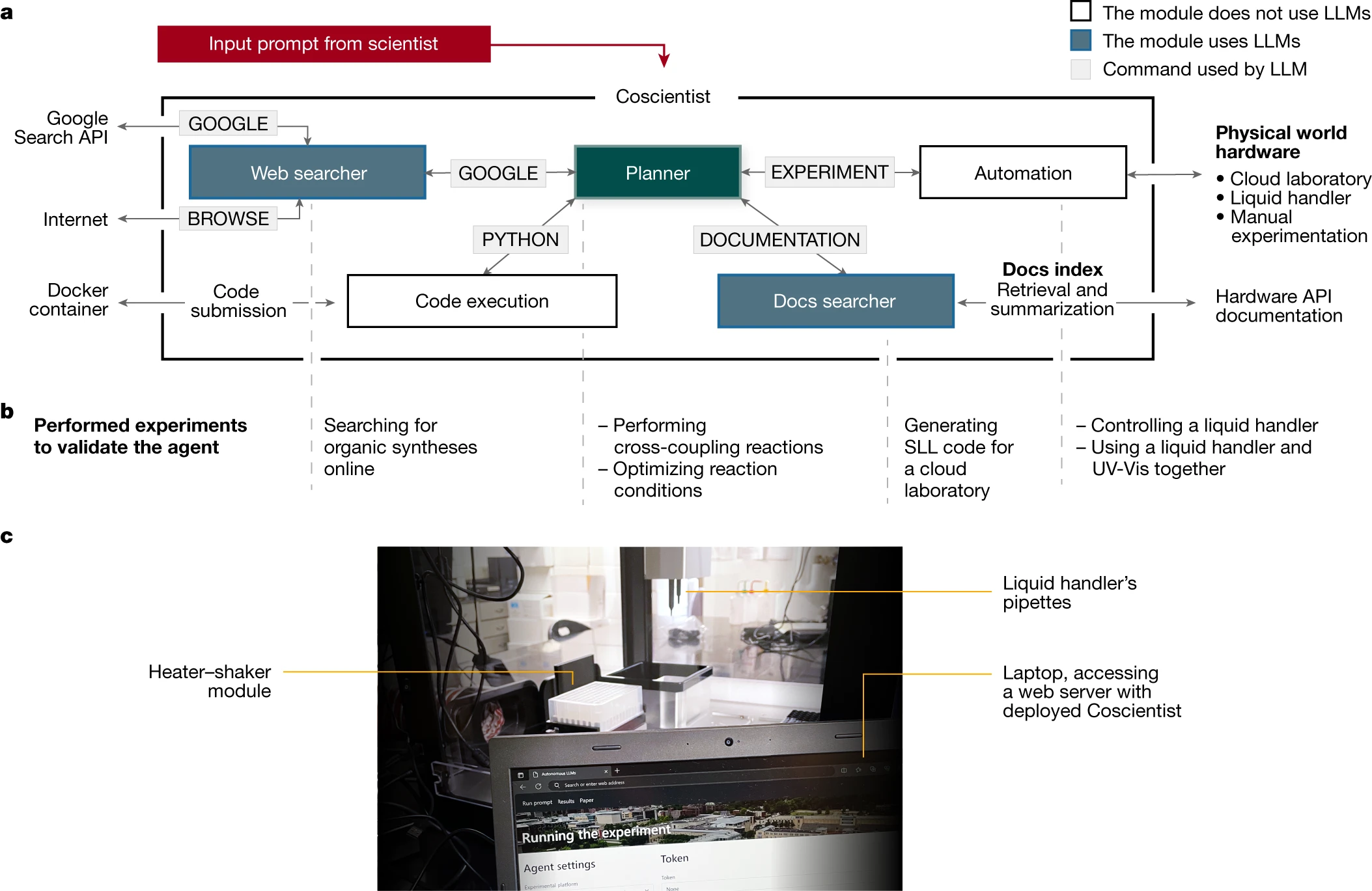
Towards autonomous research
Overview
Overview (cont.)
Important ethical aspects
Two topics
1. Ethics in using AI for research
What you can do to use LLM chatbots as ethically as possible.
Broad societal implications of AI
Biases, fairness, transparency, accountability, copyrights for training data…
Super interesting, but not today
What happens with your input data?
Model training: data can be used for future model training
OpenAI: Opt out in Settings -> Data Controls:
Turn off the option “Improve model for everyone”
Gemini: Opt out only possible via deactivating saved conversations
if activated: options to save activity for 3, 18 or 36 months
Claude: does not train on your data by default
Check for security violations of all chats. Human review.
General Data Protection Regulation
For all individuals within the EU
Avoid entering sensitive data that identifies individuals
Turning off model training on your inputs does not imply GDPR compliance.
Before processing personal data of subjects (especially patients) consult experts (e.g. data protection officers) at your university.
Options with local models or servers in EU
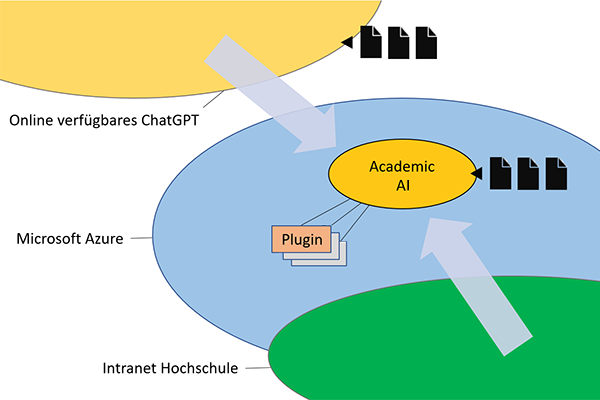
Example: Academic AI
ChatGPT is hosted on a Microsoft Azure server in EU
Data stays within “Azure secure landing zone”
Available at 23 universities (e.g. Uni Wien)
Copyright
Passive right that applies to all persons.
AI cannot be holder of copyright, as it is not a person
Example of a copyright violation:
Getty images sued midjourney (AI image creation) for training on their data.
AI in Journal Policies
Policies are evolving rapidly in response to AI developments.
Always review journal guidelines before submitting your work.
 Source: Discover Magazine